
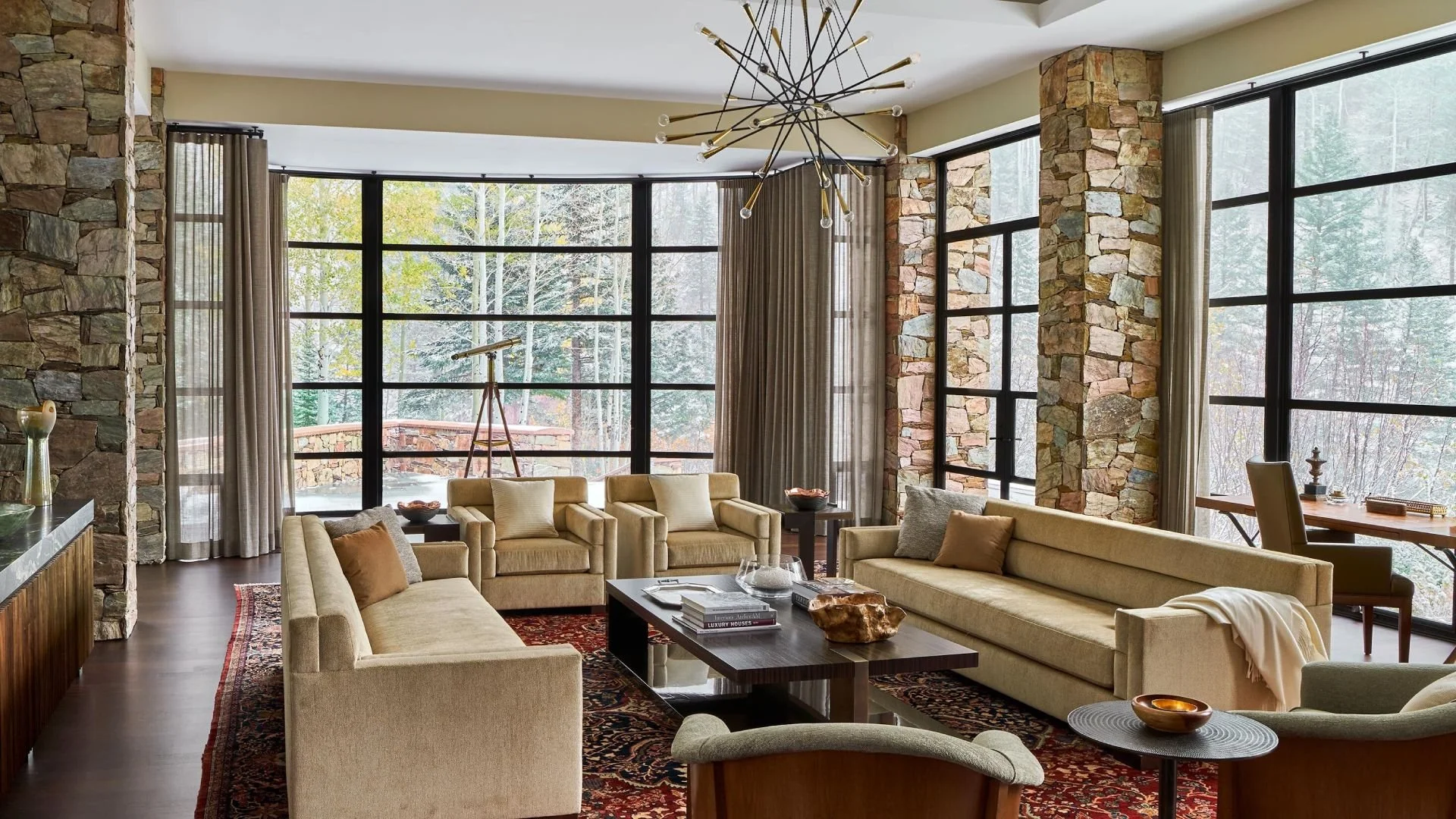
The mountain modern interior design style captures a unique feeling. It blends the rugged beauty of the landscape with the clean comfort of contemporary design. This approach is not about creating a heavy, rustic log cabin; it is about sophisticated, warm minimalism. It honors nature while providing a serene, functional living space. We find that this balance is what draws so many people to the modern mountain home's interior.
This article offers practical, room-by-room interior design ideas for a modern mountain home interior. We will explore the key features, from materials to layouts. We will also demonstrate how these elements come together to create a cohesive and beautiful home.
What Is Mountain Modern Interior Design?
Mountain modern interior design is an architectural and design style that blends the warmth and natural materials of a traditional mountain home with the clean lines and simplicity of contemporary design. It represents a shift away from the dark, heavy, and ornate lodge aesthetic of the past. Gone are antler chandeliers, taxidermy, and heavy plaid fabrics. In their place, open spaces, expansive windows, and a deep connection to the outdoors define the style.
At its core, mountain modern design is about authenticity and a sense of place. Materials sourced from the environment like wood and stone, are applied in a refined, minimalist manner, creating a design philosophy that responds directly to the landscape.
The goal is a home that feels naturally rooted in the mountains while offering all the comforts of modern, uncluttered living. It is a sanctuary that is cozy yet spacious, rustic yet refined. This careful balance produces spaces that are both striking and deeply personal, allowing the natural surroundings to remain the true focal point.

In collaboration with Linda Ruderman Interiors
Key Features of a Modern Mountain Home Interior
To achieve the mountain modern style, our interior design team is based on a specific set of core principles. These elements work together to create the signature look and feel. It is about balancing texture, light, and space. When these features are combined correctly, the result is a home that feels warm, inviting, and seamlessly integrated with the stunning landscape outside. Each feature plays a specific role in building this cohesive experience.
Natural Materials That Define the Style
Materials are the foundation of this design style. We emphasize the use of authentic, natural materials that add texture and warmth. Wood is essential. This can include reclaimed timber for exposed beams, wide-plank white oak for flooring, or natural cedar for accent walls. Stone is equally crucial. We use local stone for large-scale fireplaces, quartzite for durable kitchen countertops, and slate for entryways.
Metals complement these materials. Matte black steel, bronze, and copper are used for window frames, hardware, and light fixtures. These industrial elements provide a clean contrast to the organic wood and stone. Textiles also follow this natural theme. We layer in wool, linen, leather, and jute to add softness and tactile comfort to the clean architectural lines.
Earth-Toned Color Palettes and Muted Accents
The color palette for modern mountain home interiors is inspired directly by the surrounding landscape. We start with a base of warm, neutral, and earthy tones. This includes shades of warm white, soft taupe, and deep charcoal gray. These colors create a quiet, serene backdrop that allows the materials and the exterior view to stand out.
Accents are also muted and natural. We incorporate colors like forest green, deep navy blue, and earthy rust or clay. These colors are used sparingly in items like pillows, rugs, or a single accent chair. The goal is to avoid bright, jarring colors that would compete with the natural setting. The palette should feel calm, cohesive, and grounded.
Maximizing Natural Light With Strategic Windows
Natural light is the most crucial element. A key goal of mountain modern design is to blur the distinction between the inside and the outside. We achieve this with extensive, strategically placed windows. Floor-to-ceiling window walls are a standard feature. They frame the mountain views like living art and flood the space with light. Well-planned daylighting strategies can also reduce lighting use and support passive thermal comfort, according to the U.S. Department of Energy.
We also use clerestory windows, which are short, expansive windows placed high up on a wall. These bring in light while maintaining privacy. Skylights can illuminate interior spaces that are far from exterior walls. The window frames themselves are part of the design. We often use simple, thin frames in black steel to create a sharp, modern outline against the landscape.
Open-Concept Layouts That Connect Spaces
This style favors open, flowing floor plans. The main living area often combines the kitchen, dining room, and living room into one large, cohesive great room. This approach creates a spacious, airy, and social environment. It allows families and guests to interact efficiently, whether they are cooking, dining, or relaxing.
An open layout also allows natural light and views to penetrate deep into the home. Even from the kitchen, you can often see the fireplace and the mountain view beyond. To prevent these large spaces from feeling cavernous, we create defined zones.
This can be achieved with furniture groupings, large area rugs, or architectural details such as a dropped ceiling or a change in flooring material. At the Clear Creek Residence, we employed layered furniture zones and a quiet materials palette to create a social yet visually calm great room.
Integrating Indoor and Outdoor Living Areas
Creating a seamless transition between the interior and exterior is essential. We design homes where the outdoor spaces seamlessly blend with the indoor rooms, creating a natural extension of the living areas. This is often achieved with large sliding or folding glass doors that can be opened completely. These doors physically remove the barrier between the living room and the patio.
We also promote material continuity. For example, the stone from the living room fireplace might wrap around to the outside wall. The same flooring material might be used inside and on a covered terrace. Outdoor living areas are well-equipped. They often include comfortable seating, a fireplace or fire pit, and an outdoor kitchen. These spaces are designed for use throughout the year.
Balancing Rustic Elements With Modern Touches
The true art of the mountain modern interior design style is balance. It is a careful dance between rustic warmth and modern simplicity. If you go too rustic, the space feels like a dated cabin. If you go too modern, it can feel cold and out of place in the mountains.
We achieve this balance through contrast. A massive, rough-hewn reclaimed wood beam looks incredible against a clean, smooth white wall. A rustic live-edge dining table can be paired with sleek, minimalist chairs. A fireplace made of rough, stacked stone might have a simple, clean-lined steel mantel. This push-and-pull is what defines the style. We allow each element its own space, so both rustic textures and modern forms can be appreciated.
In collaboration with Linda Ruderman Interiors
Room-by-Room Mountain Modern Design Ideas
Applying these principles consistently throughout the home is what creates a cohesive feel. Each room has its own function, but it should still speak the same design language. We approach every space with the intention of making it warm, functional, and connected to the landscape. Here is how we translate the mountain modern style to each key room in the home.
Living Room: Cozy Meets Clean Lines
The living room is the heart of the mountain modern home. It is where you gather, relax, and take in the view. The focal point is almost always a large fireplace. We design these to be substantial yet straightforward, often featuring floor-to-ceiling stacked stone or smooth concrete. The other focal point is the view itself, framed by large windows.
Seating is arranged to serve both. We use large, comfortable sectional sofas in neutral, textured fabrics. These are paired with clean-lined armchairs, perhaps in leather or bouclé. A large area rug, often in wool or jute, anchors the seating area. Coffee tables are often simple, solid pieces made of wood or stone. Lighting is layered, with a subtle statement chandelier and softer lamps.
Kitchen: Natural Finishes and Smart Functionality
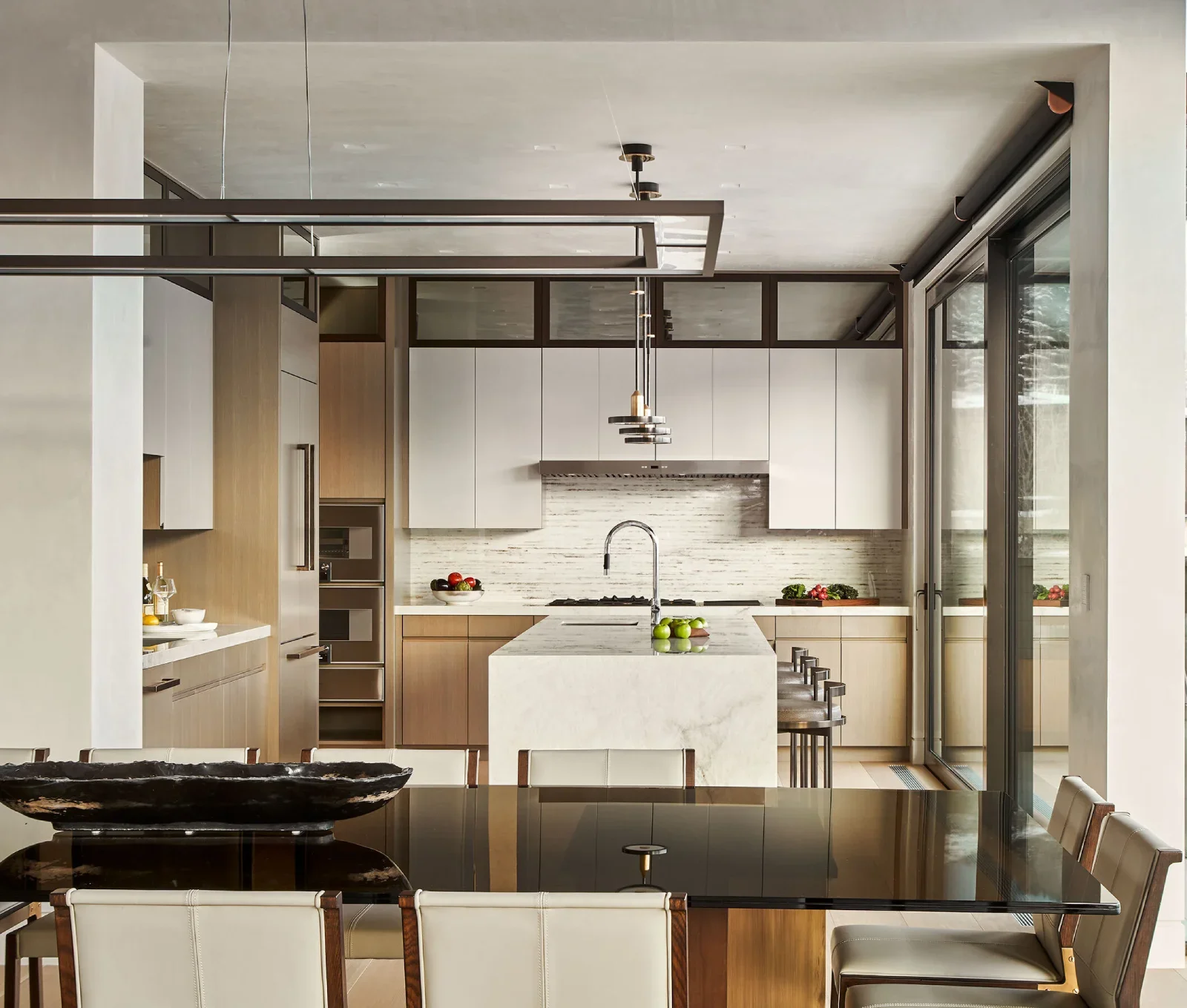
The modern mountain kitchen is a functional workspace that is also warm and inviting. It is typically part of the open-concept great room, so its design must be beautiful. We use natural materials for our cabinetry, including white oak and walnut. These are often in a simple, flat-panel style to maintain clean lines.
Countertops are a place for natural stone. Durable quartzite or honed granite are popular choices as they add organic texture. Backsplashes are often a simple, quiet tile or a continuation of the countertop slab. We often use matte black or bronze for hardware and faucets. A large island is a staple. It provides workspace and casual seating, acting as the social hub of the home.
Bedroom: Warm, Textural Comfort
The primary bedroom is designed as a serene, private retreat. The goal is to create a calm, cozy atmosphere that encourages rest. We use a soft, earth-toned color palette. The walls are often painted in a warm white or a soft, moody gray.
Texture is the main story here. We layer different materials to create warmth. This includes linen bedding, a wool throw blanket, and an upholstered headboard. A simple bench at the end of the bed might be made of live-edge wood. Nightstands are functional and straightforward.
The primary focus, as in the living room, is the window. We orient the bed to take advantage of the best view, making the landscape the first thing you see upon waking. When a richer palette supports the setting, we explore the return of color and richly textured design to add depth without overwhelming the view.
Bathroom: Spa-Like Calm With Natural Materials
The POSS Interior design team designs bathrooms to feel like a private spa, grounded in nature. Materials are key. We use honed stone, like slate or limestone, for floors and shower walls. This provides a natural, nonslip texture. Vanities are often made of wood, bringing warmth to the space. These are topped with simple stone or quartz counters.
A freestanding tub is a common feature, often placed near a large window for a soak with a view. Showers are typically walk-in and enclosed with frameless glass, which helps keep the space feeling open. Fixtures in matte black or brushed bronze add a modern, industrial touch. The lighting is soft and layered to create a relaxing ambiance.
Room-by-Room Interior Design Ideas Table
This table summarizes how the key design elements come together in each space.
| Room | Key Materials | Color Palette | Design Focus | Architectural Detail |
|---|---|---|---|---|
| Living Room | Reclaimed wood, steel, wool | Warm grays, forest green, charcoal | Cozy seating + clean lines | Exposed beams + floor-to-ceiling windows |
| Kitchen | Stone, matte black metal, oak | Earth tones, matte black, white | Natural textures + sleek cabinetry | Oversized island + range hood as focal point |
| Bedroom | Leather, linen, live-edge wood | Taupe, clay, soft whites | Calm, layered comfort | Large windows framing the landscape |
| Bathroom | Honed stone, wood vanities, bronze | Slate, ivory, eucalyptus | Spa feel + nature integration | Walk-in shower + statement tub |
Practical Considerations for Mountain Homes
Creating a stunning mountain modern interior is just the beginning. Mountain homes face unique challenges-harsh weather, steep sites, and high-altitude conditions-so a successful design must be durable, functional, and thoughtfully responsive to its environment. At Poss, we bring decades of experience building in these demanding landscapes, integrating practical solutions from the very start. The result is a home that’s as resilient as it is beautiful, where every detail balances elegance with real-world performance.
Working With Mountain Terrain and Floor Plans
The land itself is our first design partner. Unlike a flat suburban lot, a mountain site often has a steep slope. We design the home to work with the terrain, not against it. This might mean a multi-level, terraced floor plan that follows the natural grade of the land. A sloped lot can be an excellent opportunity for a walkout lower level.
This creates additional living space that is still filled with light. We also plan driveway access carefully, ensuring the grade is manageable, especially in snow. Our site analysis guide outlines the checks we conduct, including topography, access, utilities, and zoning, so you can evaluate the property with confidence before design begins.
Designing for Colorado’s Climate and Mountain Terrain
Mountain climates present unique challenges. We must design for snow, wind, and intense sunlight at high altitudes. Snow load is a primary structural consideration. This influences the roof pitch and the home's structural system. We specify extremely durable exterior materials that can withstand these extremes. Metal roofing, stone siding, and high-performance windows are essential; in cold-climate homes, advanced window assemblies measurably improve comfort by reducing radiant chill, drafts, and heat loss, as documented by NREL. These materials are not only practical but also perfectly suited to the modern mountain aesthetic.
Sustainable and Locally Sourced Materials
Sustainability is a natural fit for this style. We prioritize using locally sourced materials whenever possible, such as stone from a nearby quarry or timber from regional forests. This reduces the carbon footprint associated with transportation and supports the local economy. We also design for energy efficiency.
This includes specifying high R-value insulation, high-performance windows, and energy-efficient mechanical systems. Geothermal systems are excellent options. Many clients also plan for solar panel integration.
Smart Home Features for Remote Living
Technology plays a key role in the modern part of the equation. Many mountain homes are second homes or are located in remote areas. Smart home technology provides peace of mind and convenience. We integrate systems that allow clients to control their thermostats, lighting, and security systems from their phones. We often incorporate heated driveways or walkways. This system can be turned on remotely to melt snow before you arrive.

Seasonal Design Tips for Year-Round Comfort
A mountain home must be comfortable in all four seasons. This means planning for a wide range of activities. A well-designed mudroom, or ski room, is a must. This space provides a durable entry point to store skis, snowboards, wet boots, and jackets. It needs to have a durable floor, ample storage, and good ventilation. For summer, we design shaded outdoor terraces and promote cross-ventilation with operable windows. All upholstery and textiles must be durable and easy to clean.
Current Trends in Mountain Modern Design
The mountain modern interior design style is continually evolving. While the core principles remain the same, new trends emerge, keeping the style fresh and exciting. These trends often respond to broader movements in design, adapted for the mountain environment.
Lighter Woods and Minimalist Aesthetics
While darker woods like walnut were popular, the current trend is moving toward lighter, more natural wood tones. White oak and rift-sawn oak are extremely popular. They are used for flooring, cabinetry, and ceiling treatments. This lighter wood brightens the space and complements the minimalist, Scandinavian-inspired design. It pairs beautifully with white walls and black accents.
Mixing Textures for Depth and Warmth
To prevent minimalist designs from feeling cold, there is an increased focus on texture. This is about creating tactile depth. We achieve this by layering multiple textures within a single space. For example, a living room might have a smooth concrete fireplace, a nubby bouclé sofa, a soft wool rug, a leather armchair, and a live-edge wood table. This mix is visually interesting and makes the space feel rich and inviting.
Decorative Accents That Reflect Nature
The décor in a modern mountain home is minimal and intentional. A current trend is using objects that abstractly reflect nature. This includes hand-thrown pottery with organic shapes, artisanal textiles, and statement lighting that has a sculptural, natural form. Artwork is often large-scale and abstract, featuring colors or shapes that echo the landscape. The goal is for the decor to support the home's design, not clutter it.
How Poss Brings Mountain Modern Interiors to Life
At Poss, the mountain modern style is not just an aesthetic; it is a direct result of our design process. For decades, we have been designing luxury homes in mountain environments. Our architecture and interior design studios work collaboratively to create spaces that are a seamless reflection of the landscape and the client's vision. It is how we craft bespoke interiors rooted in mountain life, aligning materiality, proportion, and daily rituals with the site's unique characteristics.
Site-Responsive Design That Honors the Landscape
We start with the land, considering its topography, views, and sun path, then align architecture and interiors from the outset, so that furniture plans, lighting, and finishes are integrated into the design. We believe a home should feel as if it has grown from its site. Our architects conduct a deep analysis of the property to understand its topography, views, and sun path.
The home's design is a direct response to this analysis. We orient the building to capture the best views and maximize passive solar gain. The architecture frames the landscape, making the environment the star of the show.
Tailored Interiors That Reflect Each Client’s Vision
Our interior design team collaborates closely with our architects from the outset. This integration ensures that interior finishes, furniture layout, and lighting plans are considered integral to the architecture, not an afterthought.
We guide our clients through the discovery process, helping them refine their vision and objectives. The result is a home that is a perfect balance of our design expertise and the client's personal story. We create cohesive, one-of-a-kind interiors that are both timeless and deeply personal.
FAQs About Mountain Modern Interiors
What Makes a Home Mountain Modern?
It combines clean, modern lines with natural, rustic materials, such as wood and stone. The style emphasizes large windows and a strong connection to the landscape.
How Do I Avoid a Rustic Overload?
Balance rustic items with modern elements. Use clean white walls, simple furniture silhouettes, and avoid too many log cabin clichés or dark finishes.
Can I Use Mountain Modern Design in Urban Homes?
Yes, you can. Utilize natural textures, earth-toned palettes, and wood accents to introduce warmth and a sense of nature into a city environment.
How Do I Combine Modern and Rustic Styles?
Pair rustic materials (reclaimed wood) with modern forms (a simple table). Contrast a rough stone wall with a smooth, concrete floor.
Which Color Schemes Work Best in Mountain Modern Homes?
Earth-toned palettes are best. Use warm whites, deep grays, olive greens, and muted blues inspired by the natural surroundings.
What Flooring Options Suit a Mountain Climate?
Durable floors, such as white oak, engineered hardwood, or stone tile, are ideal. We often pair these with radiant in-floor heating for winter comfort.
